Opening tonight: IMMORTAL NATURE, preview 7-9pm
ICONOCLASTS previews this Thursday at Lloyds Club
In pictures: SYNTHETIC REAL preview
Views from the opening preview of SYNTHETIC REAL at Edel Assanti Project Space.
This slideshow requires JavaScript.
SYNTHETIC REAL previews this Wednesday
Ristruttura – publication launch this Thursday
FAD reviews (In)visible
Check out FAD’s review of (In)visible at Edel Assanti Project Space:
www.fadwebsite.com
(IN)VISIBLE at Edel Assanti
Gallery views of (IN)VISIBLE, currently at Edel Assanti Project Space. Visit us
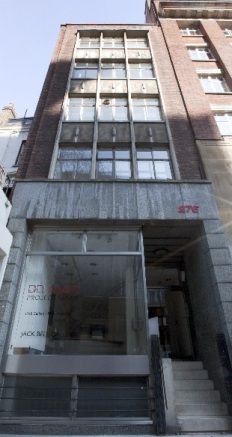
This slideshow requires JavaScript.
Now open at Edel Assanti: (IN)VISIBLE
LAURENCE EDWARDS
HENRY HUDSON
ANN-MARIE JAMES
SAYAKA MARUYAMA
GROVES NATCHEVA
LOUISE THOMAS
HUGO WILSON
22nd September – 13th November 2011
With cities, it is as with dreams: everything imaginable can be dreamed, but even the most unexpected dream is a rebus that conceals a desire or, its reverse, a fear. Cities, like dreams, are made of desires and fears, even if the thread of their discourse is secret, their rules are absurd, their perspectives deceitful, and everything conceals something else. Italo Calvino, Invisible Cities
For more information click here or visit our website
Review: Yang Fudong at Parasol Unit
Anne Blood gets lost among the timeless dislocation of Yang Fudong’s films at Parasol Unit.
Stepping into the pitch black room on the ground floor of Parasol Unit’s ex-warehouse space on Wharf Road, one is met with the soft, nostalgic sound of a film score reminiscent of Hollywood’s Golden Age, and with seven screens, each showing a separate projection from Yang Fudong’s Fifth Night (2010). After a few moments, it becomes evident that all seven synchronized screens show the same scene from different angles, and possibly even at different moments in time. The shots are supposed to feature the streets of Shanghai’s old town at night, but the exact location is undetermined, as is the date.
Unrelated characters appear and attend to their own activities, apparently unaware of the others around them. A pair of men in suits are thrown out of a taxi with two suitcases that burst open on the ground; a beautifully polished woman descends a staircase and wanders melancholically through the streets; a young man, exhausted and sweating from hard labour, walks aimlessly forward. As the characters play out their actions, they often disappear from one screen only to appear in another. But the connections are rarely fluid: there is a change in viewpoint, a disjunction in time.
Filmed on 35 mm roll, Yang refers to the technique used in Fifth Night as ‘multiple view film’. With this method, what seem to the viewer to be separate instances are actually simultaneously tied together into one scene. The aim of this is to expanding the spectator’s usual vision and perception.
Expanding or even multiplying vision is hardly a new troupe in video or film. Much experimental film of the 1920s addressed the simple question of how one can see differently through the eye of a camera. Yet Yang extends this question of ‘seeing’ from the act of filming to the act of viewing film within the gallery space. Viewed as a single work, the separate screens do not come together to form a logical whole, but push the viewer back and forth between an attempt to complete the scene and the realization of the impossibility of this task in relation to time, scale and perception. While this cinematic space maintains links to reality, it exists beyond it and cannot be recreated in the physical world in any other form or medium other than film.
Upstairs, Yang’s latest work, One Half of August (2011), fills the room with an eight-screen video installation. On each screen is projected a different, unconnected scene within which another video appears projected onto unlikely objects, such as bottles or pieces of sculpture. Here the films within films draw attention to the experience of viewing, as they appear to open up like a Russian doll and reveal their own distortion as the images projected onto objects literally become misshapen. The strange sensation of viewing a film within a film creates a sense of embodied perception; as we look at the film it as though we are looking in the mirror, watching the projection of a scene playing out in front of us as we perform the same action in real time.

Yang’s third film at Parasol Unit, Yejiang (The night man cometh) (2011) is a single-screen work that trails a palace guard on his nightly rounds. Wandering in this same landscape is a young woman in traditional Chinese dress who appears to be searching for the guard. At the same time, a tall, thin man, all in white, wanders nervously through this landscape, trailed by another inquisitive young woman, also in white. As these four figures move, the camera cuts between them until they finally come together around the night guard’s campsite. Though it is the most overtly narrative of Yang’s three films, Yejiang still resists conclusion. Much like Fifth Night, this film evokes a strong sense of nostalgia through its long, cinematically stunning shots, yet it is impossible to locate this past in time or place. With all three films, Yang creates a situation in which it is difficult to find a clear point of reference, creating a strange sense of uncanny displacement.
Yang Fudong is at Parasol Unit until 6th November 2011


